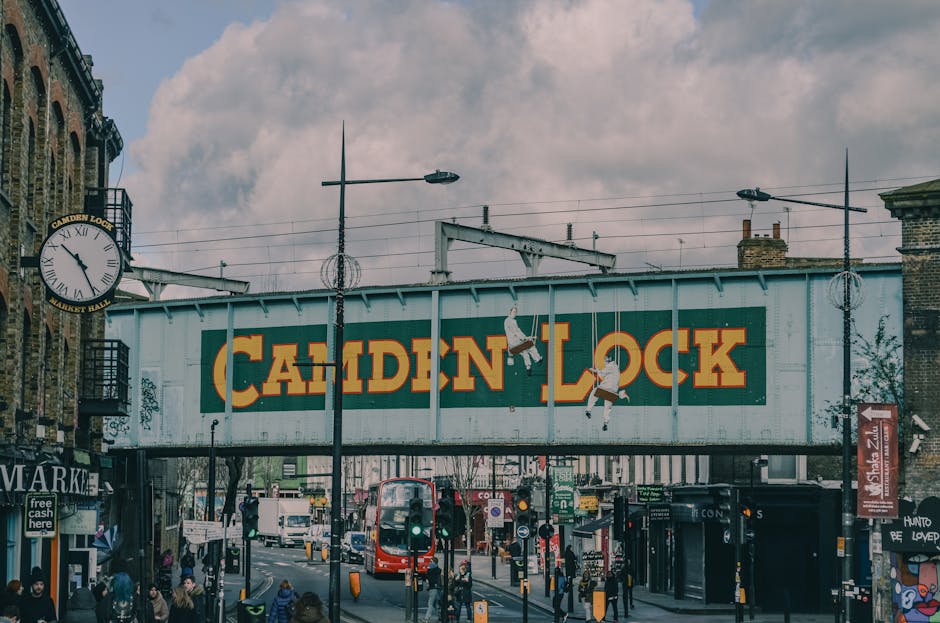
Camden Lock bulky rubbish removal for riverside flats

If you live in a riverside flat near Camden Lock, bulky waste can turn from "I'll deal with that later" into a very real problem, very quickly. A sofa blocking the hallway, a broken fridge in the utility corner, or a stack of old furniture after a move-out all need more than a quick tidy-up. Camden Lock bulky rubbish removal for riverside flats is about clearing large items safely, keeping shared spaces usable, and avoiding the awkward mix of lifts, stairs, time limits, and building rules that often come with waterside apartment living.
In this guide, you'll get a clear look at how the process works, what to expect, what to avoid, and how to choose the most practical removal approach for a flat by the canal. You'll also find a checklist, comparison table, and a few real-world considerations that tend to matter more than people expect. Truth be told, the "bulky rubbish" itself is only half the story; access is usually the bigger headache.
Why Camden Lock bulky rubbish removal for riverside flats Matters
Riverside flats around Camden Lock often come with shared entrances, narrow internal routes, lifts that may not take oversized items, and neighbours who notice if a corridor is left messy for too long. That means bulky waste is not just a storage issue; it can become a safety issue, a building management issue, and sometimes a goodwill issue too. Nobody enjoys squeezing past a dismantled wardrobe at 8am with a coffee in hand.
There's also the practical side. Large items can be difficult to move without scratching walls, denting lifts, or causing a nuisance in communal areas. In a waterside setting, you may also have tighter loading access, awkward parking, or restrictions on where vehicles can stop. Those little details matter. A planned collection is usually far less stressful than a last-minute scramble.
For landlords, letting agents, and residents handling end-of-tenancy clearances, bulky waste removal helps keep handovers tidy and avoids dragging a small problem into a bigger one. If the flat also needs a broader clear-out, services like flat clearance and home clearance can be a sensible next step, especially when multiple rooms need attention rather than one or two items.
Key takeaway: bulky rubbish removal near Camden Lock is as much about access, timing and safety as it is about lifting items out of the flat. The best result is usually the one that feels calm, neat and predictable.
How Camden Lock bulky rubbish removal for riverside flats Works
The process is usually straightforward once the access plan is clear. You share what needs removing, confirm where the property is, and explain any building restrictions. From there, the collection team can assess how many people are needed, whether items need dismantling, and whether there are any special handling concerns such as refrigeration, glass, or heavy furniture.
In practice, that may mean a simple collection from the flat, a carry-down through stairs or lift, and loading into a vehicle for sorting and disposal elsewhere. The smoothest jobs are the ones where the resident has already cleared a route from the living room to the exit. It sounds obvious, but you'd be surprised how often a footstool, a plant stand, and a few shoe boxes become the real obstacle.
For mixed waste or awkward loads, a broader waste removal service can be more suitable than trying to separate everything into tiny, separate jobs. If the bulky items include sofas or mattresses, the specialist pages for mattress and sofa disposal can help you think through the handling needed for those larger, less forgiving items.
Booking usually works best when you provide:
- the full address and flat number
- floor level and lift access
- item list with approximate size
- whether anything needs dismantling
- parking or loading restrictions
- any fragile surfaces, tight corners, or concierge requirements
If you have appliances in the mix, mention them early. Fridges, freezers and similar items often need different handling from ordinary household rubbish, and the right removal plan can save a lot of faff. The same goes for anything that may be classed as hazardous or needing separate treatment.
Key Benefits and Practical Advantages
The biggest benefit is simple: you get your space back. But that's only the obvious one. A good bulky rubbish removal service for riverside flats also protects the building, the neighbours, and your own time. That matters when your home is part of a busy shared block rather than a detached house with a side gate.
Here are the practical advantages people usually notice first:
- Less disruption: a planned collection is quicker and cleaner than several DIY trips.
- Safer moving: trained handling reduces the chance of injury or damage in narrow routes.
- Better building etiquette: communal areas stay clear, which keeps everyone happier.
- More efficient disposal: items can be sorted properly for reuse, recycling or disposal.
- Less stress during moves: especially useful when moving out, re-letting, or resetting a flat after tenants leave.
There is also a quiet benefit that people often overlook: decision fatigue drops away. Once the bulky items are gone, it becomes much easier to deal with the rest of the flat. One clear corner tends to lead to another. A bit of momentum never hurts, does it?
Where furniture is the main issue, you may find it helpful to look at furniture clearance or furniture disposal options. These are especially useful when you're not clearing an entire flat, just the items that no longer fit your layout or your life.
Who This Is For and When It Makes Sense
This kind of service is for residents who need a practical way to remove bulky items without turning the day into a logistical marathon. It's often the right fit for:
- tenants moving in or out of riverside flats
- landlords preparing for new occupants
- letting agents dealing with abandoned items
- owners replacing old furniture or appliances
- flatshare residents pooling unwanted items after a clear-out
- people dealing with a sudden bereavement or a long-delayed flat tidy-up
It also makes sense when the items are too large for standard waste bins and too awkward for a regular car boot run. A battered chest of drawers, a broken sofa bed, or a full-size wardrobe is not something you want to wrestle through a riverside lobby at dusk. To be fair, most people only try DIY once before deciding they'd rather not repeat the experience.
If the property has become cluttered over time, a wider house clearance or home clearance approach may be more appropriate. If it's just one room, one bulky item or a couple of awkward pieces, a smaller collection is often enough.
Step-by-Step Guidance
If you want a smoother collection, a little preparation goes a long way. Here's a practical way to handle it without making the process more complicated than it needs to be.
- List everything that needs to go. Be specific. "Old furniture" is less useful than "two armchairs, one divan base, one broken desk and a microwave."
- Check access. Note lift size, stairs, concierge rules, and loading restrictions. One small detail can save a big delay.
- Separate special items. Appliances, sharp objects, and anything potentially hazardous should be flagged early.
- Clear the route. Move loose objects, hall clutter, and fragile decor out of the way.
- Confirm timing. Choose a slot that works with building quiet hours, neighbour traffic, and parking conditions.
- Ask about sorting. Some items can be recycled or reused; others need careful disposal.
- Prepare payment and paperwork. If your building requires proof of collection, keep that handy.
When the team arrives, the best collections usually follow a simple rhythm: assess, move, load, sweep through, and leave the place looking tidy. A good service should feel almost boring in the best possible way. No drama. No surprise detours through the lift lobby.
If your bulky rubbish is only one part of a wider clear-out, you may also want to explore loft clearance or garage clearance if those spaces are holding extra overflow items that have quietly multiplied over the years.
Expert Tips for Better Results
Experience shows that the most successful collections usually come down to preparation rather than muscle. A few small choices make the job easier, quicker, and cleaner.
- Photograph bulky items in place. This helps with planning, especially if access is tight.
- Measure doors and lifts. A 30-second measurement can prevent a 30-minute delay.
- Disassemble what you safely can. Flat-pack furniture, bed frames and some shelving often move better in parts.
- Keep screws and fixings together. A small bag taped to the item is a simple trick that saves time.
- Tell the provider about fragile routes. Glass edges, polished floors and painted walls need more care than people realise.
A slightly dull but very useful tip: if the job is likely to involve more than one type of waste, ask how the load will be separated. Mixed loads can affect pricing and handling. Better to know upfront than to have a last-minute eyebrow raise at the door.
For appliance-heavy clearances, the dedicated fridge and appliance removal page is worth a look. If you're disposing of work files or sensitive paperwork during a move, confidential shredding can sit neatly alongside the rest of the clearance plan.
Common Mistakes to Avoid
Most problems with bulky rubbish removal are avoidable. The trouble is, they tend to be the sort of mistakes you only notice once the item is halfway through the hallway.
- Underestimating item size: a sofa looks smaller in a corner than it does in a lift.
- Not checking building rules: some blocks have loading windows or concierge procedures.
- Leaving everything until the last minute: that's how collections become rushed and messy.
- Mixing prohibited materials with normal rubbish: hazardous items need separate handling.
- Forgetting about parking: in central and canal-side areas, access can be tighter than expected.
- Assuming every collection is the same: one flat may be a simple carry-out; another may need careful dismantling and protection.
Another quiet mistake is not asking about disposal routes. If sustainability matters to you - and it probably should - it helps to know that reusable items, recyclable materials and non-recyclable waste may be handled differently. The responsible route is usually better for everyone, even if it takes a minute longer to explain.
Tools, Resources and Recommendations
You don't need a van-load of kit to prepare for bulky rubbish removal, but a few basic tools and habits help a lot. Think of this as the difference between "managed" and "messy".
- Measuring tape: for doors, hallways, and lift access
- Marker labels: to mark what's going, what's staying, and what needs dismantling
- Strong gloves: for minor prep and sorting
- Zip bags or small tubs: for screws, cables and fittings
- Blanket or edge protection: if you're moving items through narrow, painted routes
- Phone photos: for quick access checks and planning
From a service perspective, a few website pages can help you narrow down the right approach. If your flat contains a lot of mixed household goods, the broader flat clearance page may be the best fit. If the bulky items are just one part of a wider property reset, waste removal is a useful starting point.
For clients who want to understand how the company approaches standards and service, the pages on recycling and sustainability, health and safety policy, and insurance and safety give helpful context. They're not just paperwork pages; they help show what a careful collection process should look like.
Law, Compliance, Standards and Best Practice
For bulky waste in the UK, the most important thing is that items are handled responsibly, by people who understand waste duties, safety, and proper disposal routes. Without getting lost in legal jargon, the key principle is simple: waste should not be fly-tipped, mishandled, or left in a way that creates risks for residents, neighbours, or the wider area.
If you live in a riverside building, compliance also intersects with practical building management. That means respecting communal areas, following access rules, and avoiding blockages in exits or shared routes. In a busy development, even a temporary obstruction can become a real nuisance very quickly.
Best practice usually includes:
- clear communication before arrival
- careful handling of bulky and heavy items
- separating reusable or recyclable items where possible
- safe management of appliances and special waste streams
- respect for building access, shared spaces and neighbours
If any item might be hazardous - old chemicals, certain paints, damaged electricals, or anything leaking - it should be identified early so it can be handled properly. The dedicated hazardous waste disposal page is particularly relevant in those situations. Better to pause and check than to guess. Guessing with waste is never ideal, and sometimes a bit expensive. Not fun.
Options, Methods and Comparison Table
There are usually a few ways to deal with bulky rubbish in a riverside flat. The right choice depends on how much you're clearing, how quickly you need it gone, and how awkward the access is.
| Method | Best for | Strengths | Limitations |
|---|---|---|---|
| DIY disposal | One or two small items | Low direct cost if you already have transport | Time-consuming, risky for heavy items, awkward in flat blocks |
| Skip hire | Larger renovation or mixed waste projects | Good for ongoing work and repeated disposal | Needs space, permits may be an issue, not ideal for lift-access flats |
| Bulky waste collection | Single items or a defined pile of large rubbish | Fast, convenient, less effort in shared buildings | Needs accurate access details and item descriptions |
| Full clearance service | Whole-flat or multi-room clear-outs | Most complete solution, good for moves and end-of-tenancy jobs | May be more than you need for a very small load |
For many Camden Lock flats, direct bulky collection is the sweet spot. It avoids the space and permit issues that can come with skips, while still handling the awkward bits properly. If you're unsure whether a skip is even practical, the page on what can go in a skip can help you compare the kind of waste you have with the kind of solution you need.
Case Study or Real-World Example
Picture a riverside flat with a second-hand sofa, a mattress, a broken desk chair, and a heavy chest of drawers left behind after a tenancy change. The resident has a lift, but it's narrow. There's also a shared lobby that opens straight onto the main entrance, so the building manager wants the area kept clear and tidy.
The best approach in that scenario is usually simple preparation and a defined collection window. The resident sends photos, notes that the sofa may need partial dismantling, and confirms the loading spot. On the day, the team carries items out in the right order, protects corners where needed, and keeps the route clear for neighbours. The whole thing is over before lunch, and the flat feels different almost immediately. Lighter. Less cramped. That little psychological lift is real.
This is also where a focused furniture service can help. In many cases, a tailored furniture clearance solution works better than trying to solve everything in one go with a generic approach. If the items are mostly seating or bedding, then specialist disposal pages such as mattress and sofa disposal can be the most practical route.
Practical Checklist
Use this before your collection day. It keeps things calm and stops small oversights becoming annoying delays.
- Have I listed every bulky item clearly?
- Have I checked lift size, stair access and building rules?
- Do I know whether any items need dismantling?
- Have I separated appliances, sharp items and anything hazardous?
- Is the hallway clear from the flat to the exit?
- Do I know where the vehicle can load safely?
- Have I told the provider about parking restrictions?
- Do I need proof of collection for a landlord or managing agent?
- Have I checked whether any items can be reused or recycled?
- Is the flat ready for a quick sweep-through once the items are gone?
A small thing, but a useful one: keep a bag for loose chargers, screws, brackets and fittings. They have a strange habit of disappearing into the one drawer you forgot about.
If the clear-out is happening as part of a move, a refurbishment, or a wider property reset, consider whether services like builders waste clearance or office clearance might also be relevant to other items on site.
Conclusion
Camden Lock bulky rubbish removal for riverside flats is really about making life easier in a place where access, neighbours, and timing all matter. Do it well, and the flat feels calmer, the building stays tidy, and you avoid the small pile of hassle that bulky waste tends to create when it's left too long. Do it badly, and suddenly a simple sofa becomes a weekend project nobody asked for.
The smartest approach is usually the one that respects the flat layout, the building rules, and the type of items you're clearing. Measure once, plan properly, and don't be shy about asking questions before collection day. That little bit of care tends to pay for itself in saved time and less stress.
Get a free quote today and see how much you can save.
And if you're staring at a room that feels more crowded than it should, don't worry - one good collection can change the whole feel of the place. Sometimes that's all it takes.
Frequently Asked Questions
What counts as bulky rubbish in a Camden Lock riverside flat?
Bulky rubbish usually means large items that don't fit in normal bins, such as sofas, wardrobes, mattresses, desks, chairs, and some appliances. If it takes two people to carry comfortably, it probably counts as bulky.
Can bulky rubbish be removed from a flat with only lift access?
Yes, often it can. The key is checking the lift dimensions, booking the right time, and making sure the item can fit safely without damaging the lift or the item itself.
Do I need to dismantle furniture before collection?
Not always. Many items can be removed intact, but dismantling can make a big difference if you have narrow hallways, tight corners, or a small lift. If you can safely take a bed frame apart, that usually helps.
Is bulky rubbish removal better than hiring a skip for riverside flats?
For many flats, yes. A skip can be awkward if there's limited space or no good place to position it. A direct collection is often simpler for one-off bulky items or a defined pile of waste.
What if I also have a fridge or washing machine to remove?
Say so early. Appliances often need specific handling, so it helps to mention them when booking. A specialist appliance collection is usually the safer option than treating them like ordinary furniture.
Can I include old sofas and mattresses in the same collection?
Usually yes, provided the collection provider accepts those items and knows about them in advance. It's best to mention them clearly so the load is planned properly.
How should I prepare a riverside flat before collection day?
Clear the route, separate items by type, take measurements if access is tight, and make sure the building manager or concierge knows what's happening if needed. A little prep saves a lot of time.
What happens to the bulky waste after it is collected?
It is typically taken away for sorting, reuse, recycling, or disposal depending on the item and its condition. Reusable items may be separated from waste that has to be processed differently.
Are there any items that should not be mixed with bulky waste?
Yes. Hazardous materials, leaking chemicals, and some special waste streams should be flagged separately. If you're unsure, ask before collection rather than leaving it to chance.
How quickly can bulky rubbish be removed from a Camden Lock flat?
That depends on access, item size, and booking availability. If the access details are clear and the load is straightforward, it can often be arranged quite quickly.
Do I need to be at the property during collection?
Usually yes, or at least someone should be available to grant access and confirm what is being removed. In managed buildings, that might also mean checking in with a concierge or building contact.
What is the best option for a whole-flat clear-out?
If multiple rooms need clearing, a full flat clearance service is often the most practical choice. For smaller loads, a more targeted bulky waste removal may be enough.